Soft Archives - a dance patchwork
Review of Sigma's Soft Archives - in the latest independent studio theatre

Soft Archives, as a contemporary dance performance, has a uniquely Singaporean overtone. I couldn’t pinpoint what exactly it was. But much like the quilt you see on stage (assuming you are watching), Soft Archives was a patchwork of things. Things uniquely Singaporean but universally understood – the endless building, construction, reconstruction. The struggle and toil of the self, the story of the pioneer generation toiling for the future generation, future generation stepping on the back of their predecessors. The story of Sigma as a dance company and community tracks that development too. The last performance, Streams where Deer Drink, was a roving performance around the old space in Raeburn Park, celebrating the memories, bidding farewell to an old space. The latest performance, Soft Archives, is set in the new space, black-box style, flowy black curtains, with a door opening up to the container-filled, well-lit port.
Hence, it is only apt and fully in the spirit of theatrical irony that the drilling and hacking next door took place simultaneously, 40 minutes before the show started, and persisted until the end of the performance. But in a way the drilling fitted quite well with part of the soundscape, especially when the multimedia projection shows the scaffolding of endless construction works in a city that keeps growing.
Before the show started, audience members democratically elected how they want the show to be sequenced. There were 6 images, reflecting the six modules of the dance performance, and the will of the majority dictates how these images / dance modules would be strung together. Each night is a unique construction. Post-performance, I asked how this was actually executed. Each module flowed and blended into another, as if they were exactly meant to be performed in a certain sequence. But of course, it takes a lot of effort to appear effortless, much like duck paddling below the placid water. What we didn’t see is dancers writing down the sequence and communicating with each other backstage what the next scene was going to be.
I was at another dance workshop the night before, conducted by none other than the NDT dancers. I remember watching NDT as a high school theatre student, taken by surprise how a dance performance can be as creative and hopelessly hilarious [growing up watching Swan Lake and White-Haired Girl (incisive commentary of class struggles) hasn’t exactly shown me the pinnacle of comedy] During the mastercalss, the NDT dancer explained how the choreography was supposed to make us feel. “You should feel like you are taken by surprise. By how fast your body can move.” In Soft Archives, the surprise was mutual. The audience is as surprised as the dancers, the lighting designer, the musicians and all the other creatives, as to how the body could move and shape each scene.
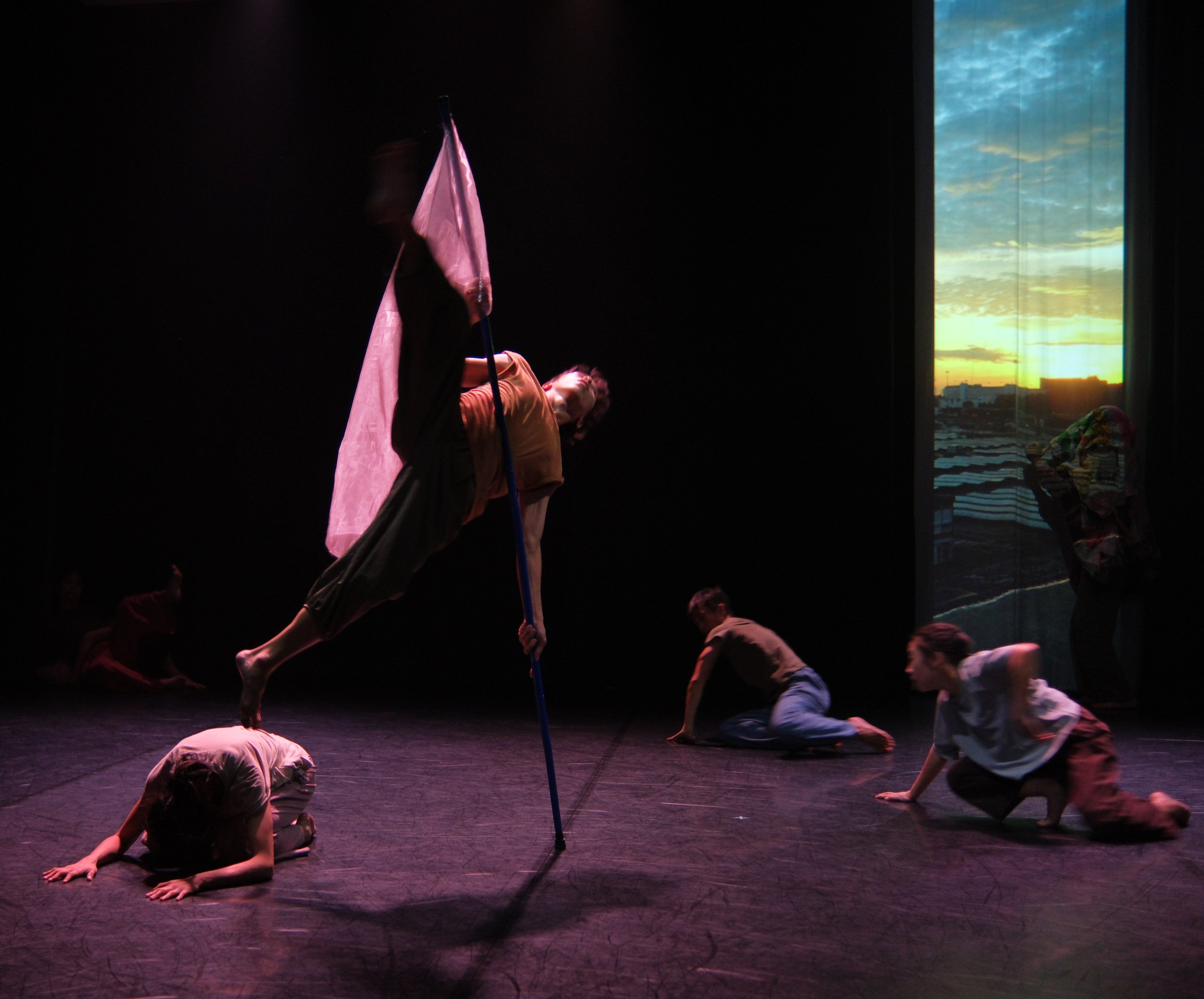
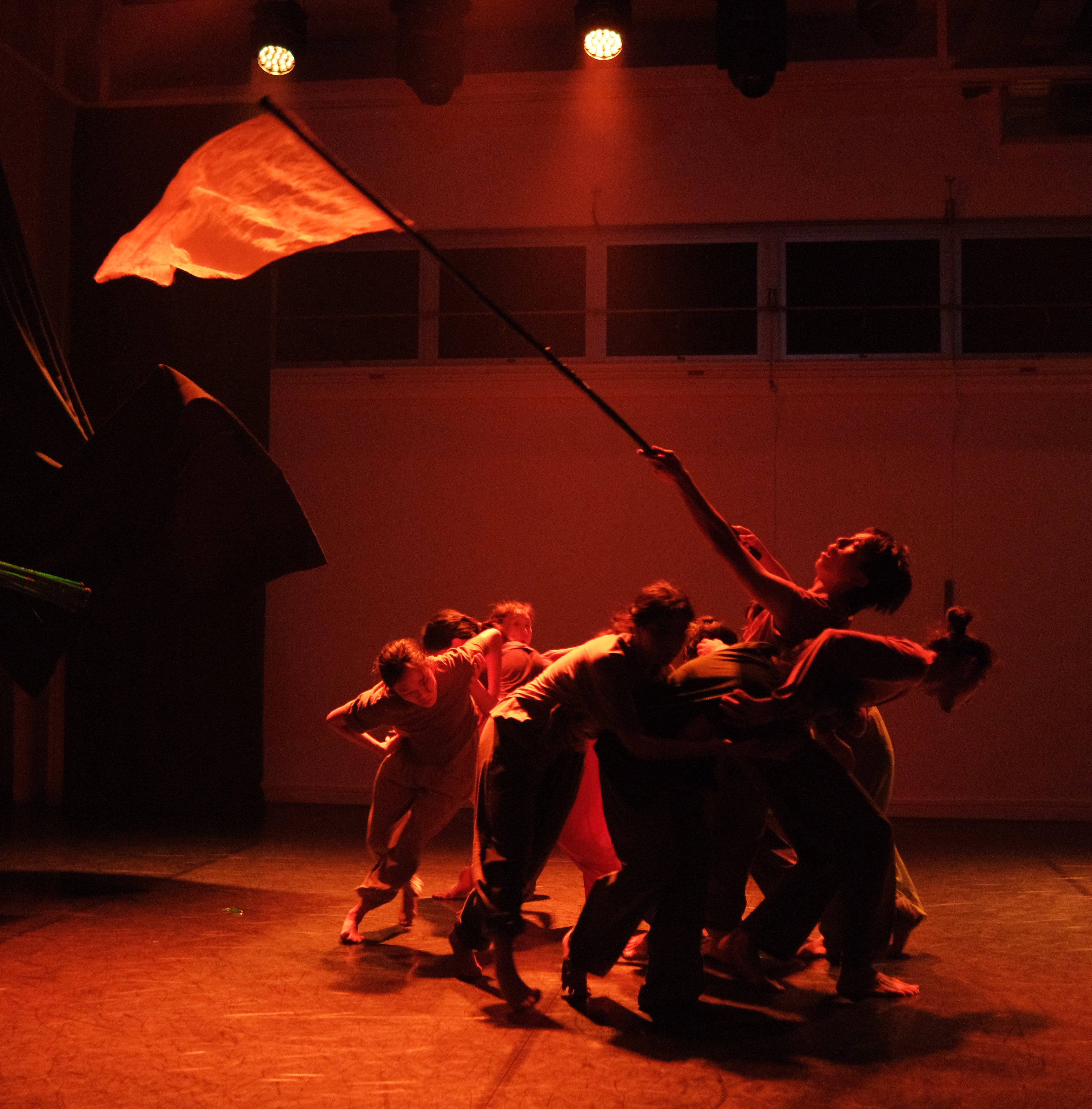
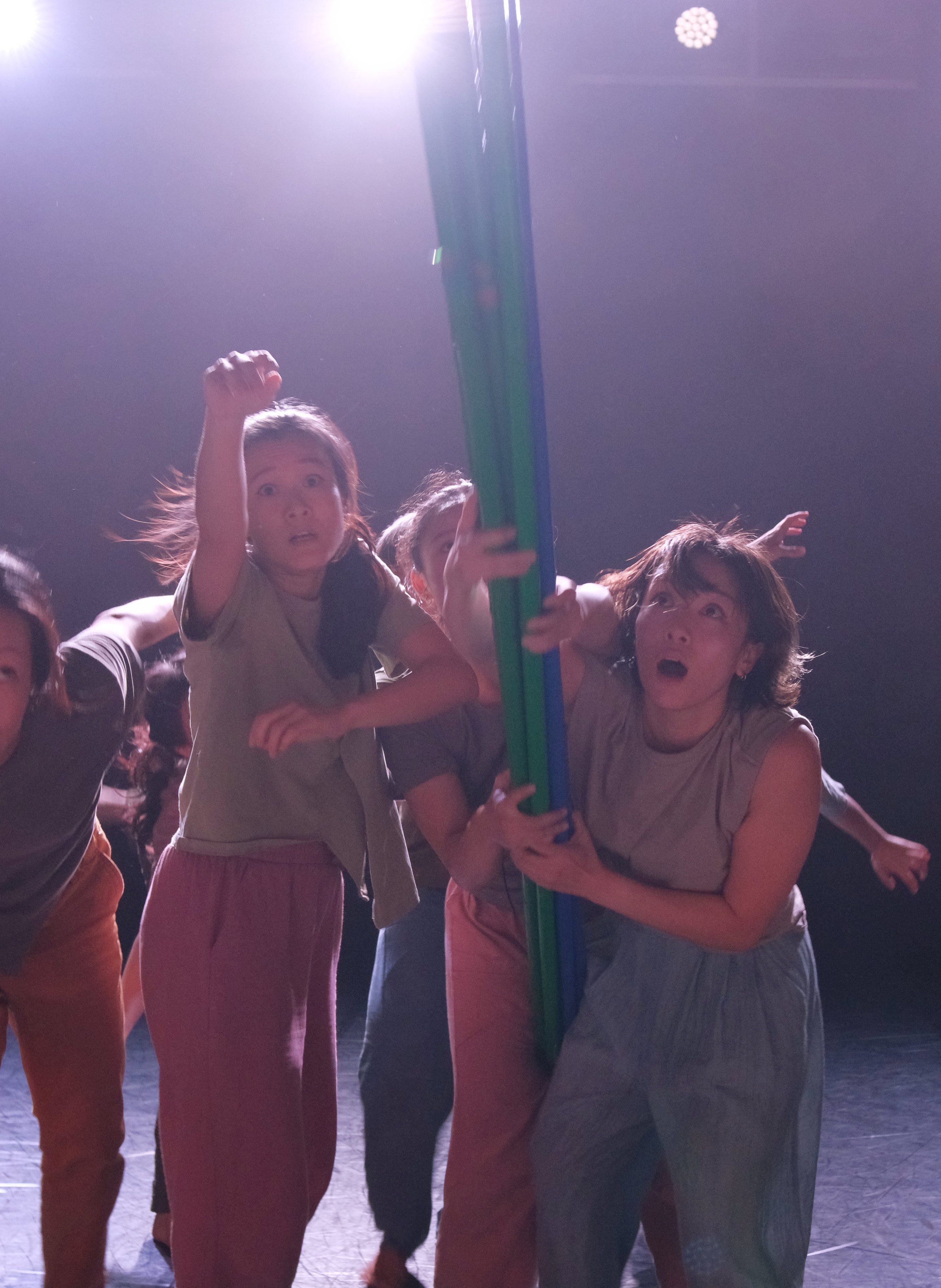
The other surprising element was the use of poles – which might just be another completely random artistic choice – how the dancers built with them, leaned on them, wielded them, connected with another body through the poles. Even though these are just the most plain and ordinary laundry poles commonly seen in heartland shops, widely used in HDB-staying Singaporean households, and not exactly known for their aesthetics. With each passing scene / module, the poles take on so many new meanings. At some point, I stopped trying to make sense of what the poles could represent, and opted to take in the visually arresting piece as it is - a piece blending the mundane with the magic of the human body, flying and slicing through space.
One of my favourite scenes was when one pole transformed into a flag. But the flag was a shiny and flowy piece of cloth. The purplish pink reminiscent of sunsets in Singapore. There were separate duets which sometimes converged into a group ensemble phrase. Bodies stacking, chasing the tail of the flag. I remember rushing out of the house one day to see the sunset fading into dusk. It is like watching the swan song of the day, the last burst of sun. It is the most accessible beauty that is the most breath-taking.
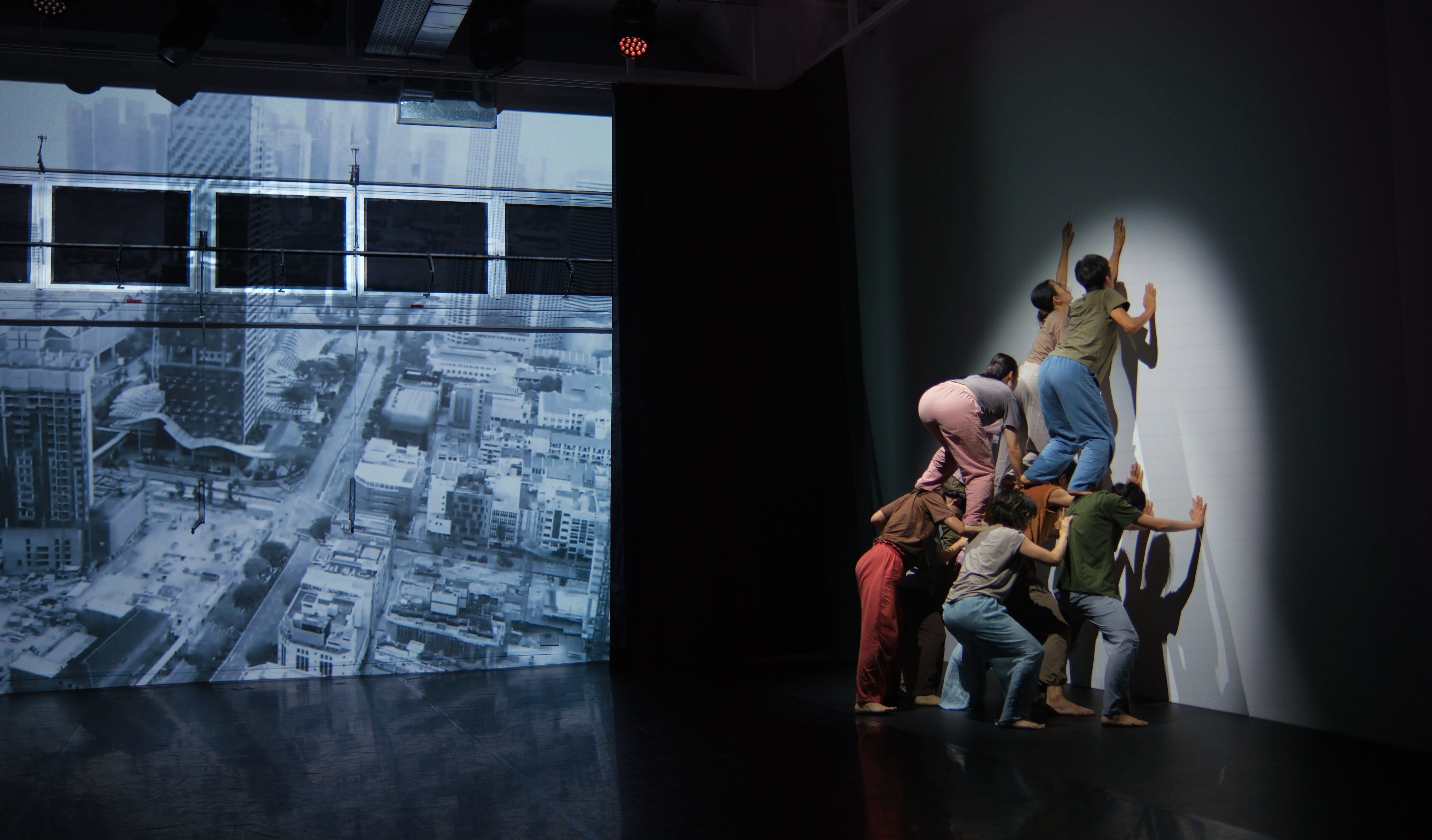
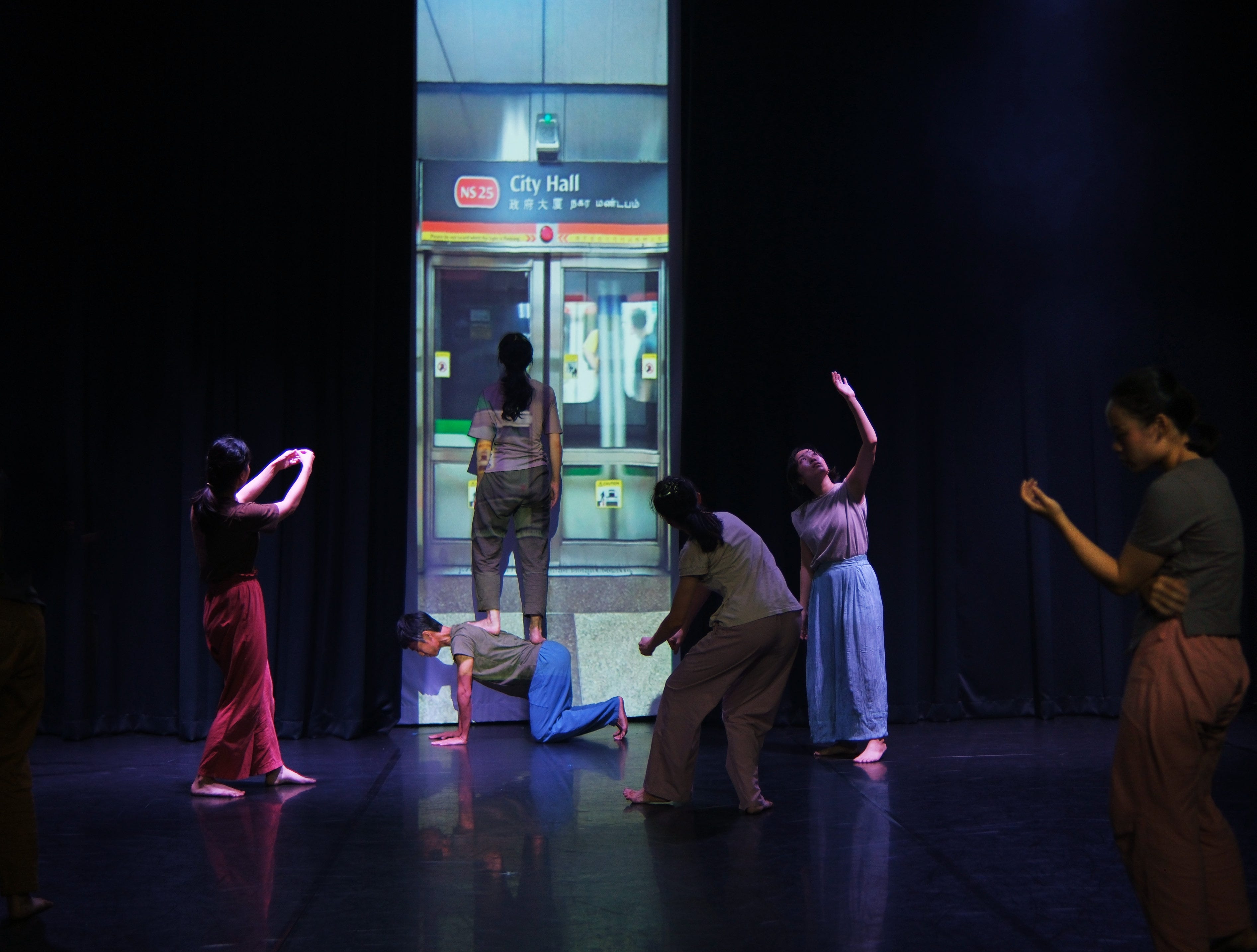
The remaining scenes / modules were enjoyable in their own ways. Some were meditative; some were cathartic, with wild drums and music impossible to count to as dancers. The train scene had people rolling and flooding onto each other, and with poles transforming into the MRT railings. The familiar MRT announcements, the weary eyed commuters who spend just a little too much time on the phone. The human pyramid scene had a dreamscape quality (aided of course by the slightly trancelike music). Again, dancers literally piled on each other, climbing the allegorical ladder, perhaps an homage to the Singaporean dream.
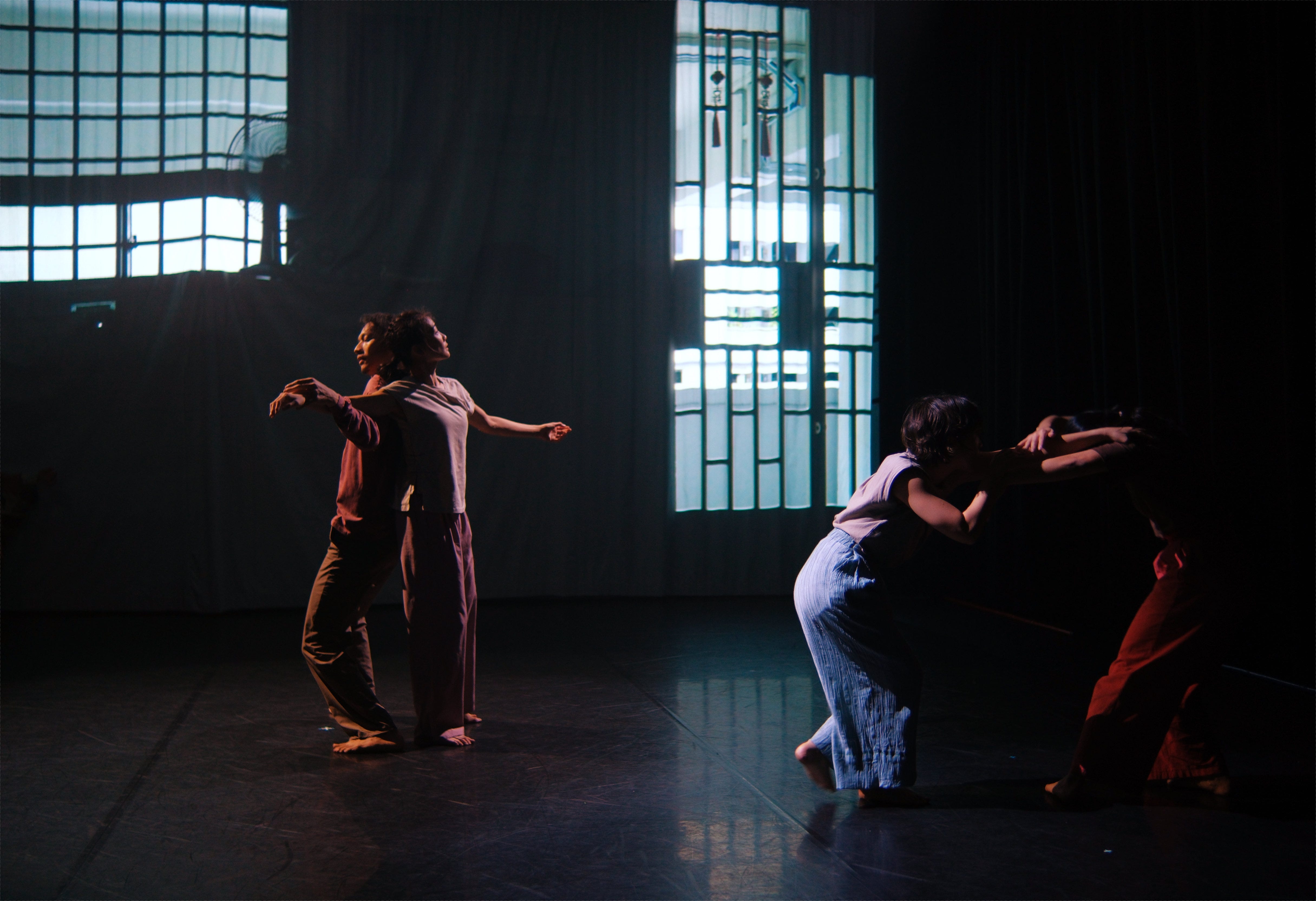
There was a scene where two dancers mirrored each other, against the backdrop of someone’s house. The whirring fan, the window grills, are iconic features of a Singaporean household. Cantonese monologue in the background, while WJ (one of the dancers) responded in Cantonese in real-time. I learnt later on that the house belonged to the mother of one of the choreographers’. I also learnt that the Cantonese monologue was an interview with WJ’s grandmother, who talked about the struggle of her youth, but gratitude for her filial children and grandchildren.
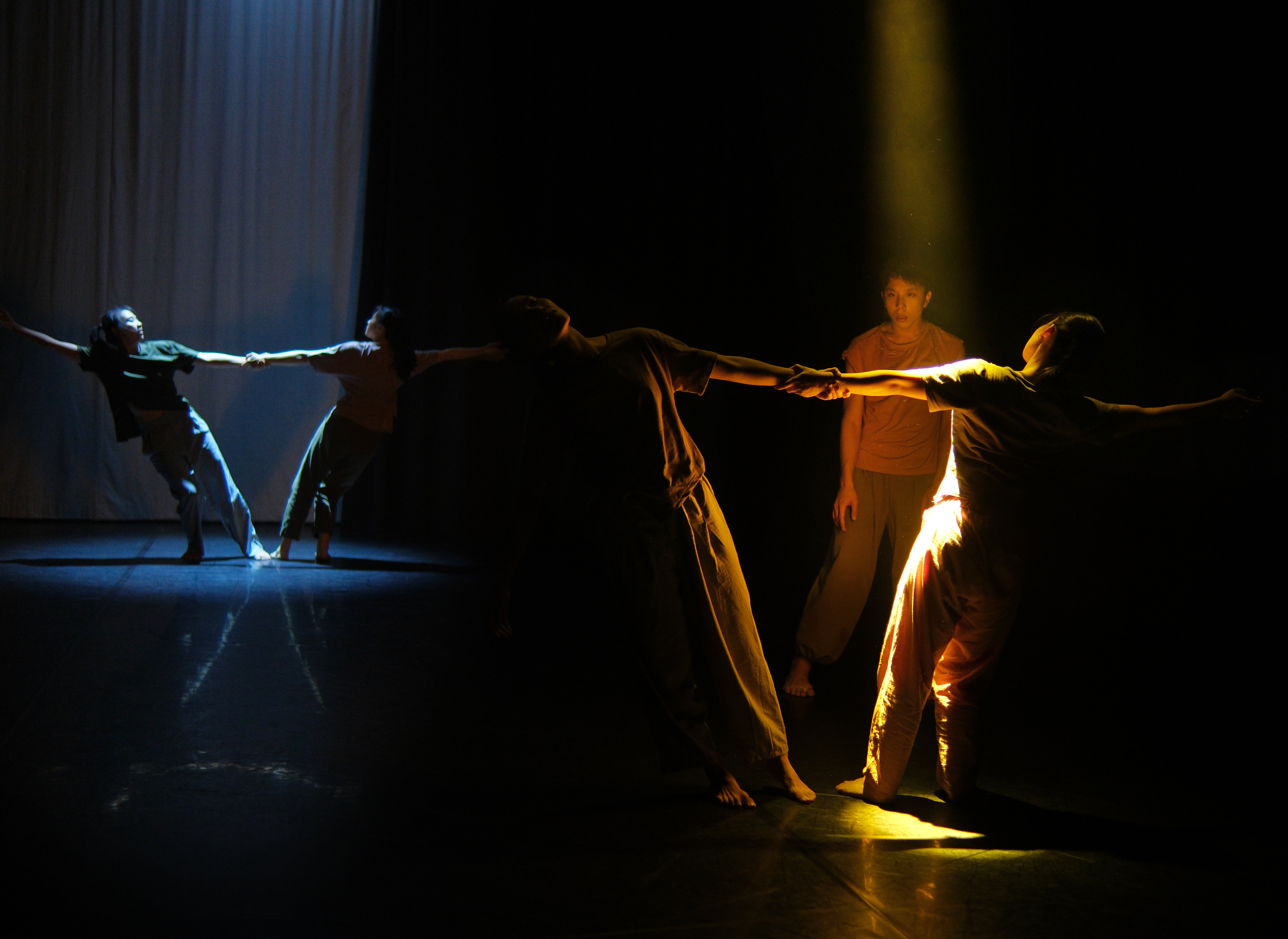
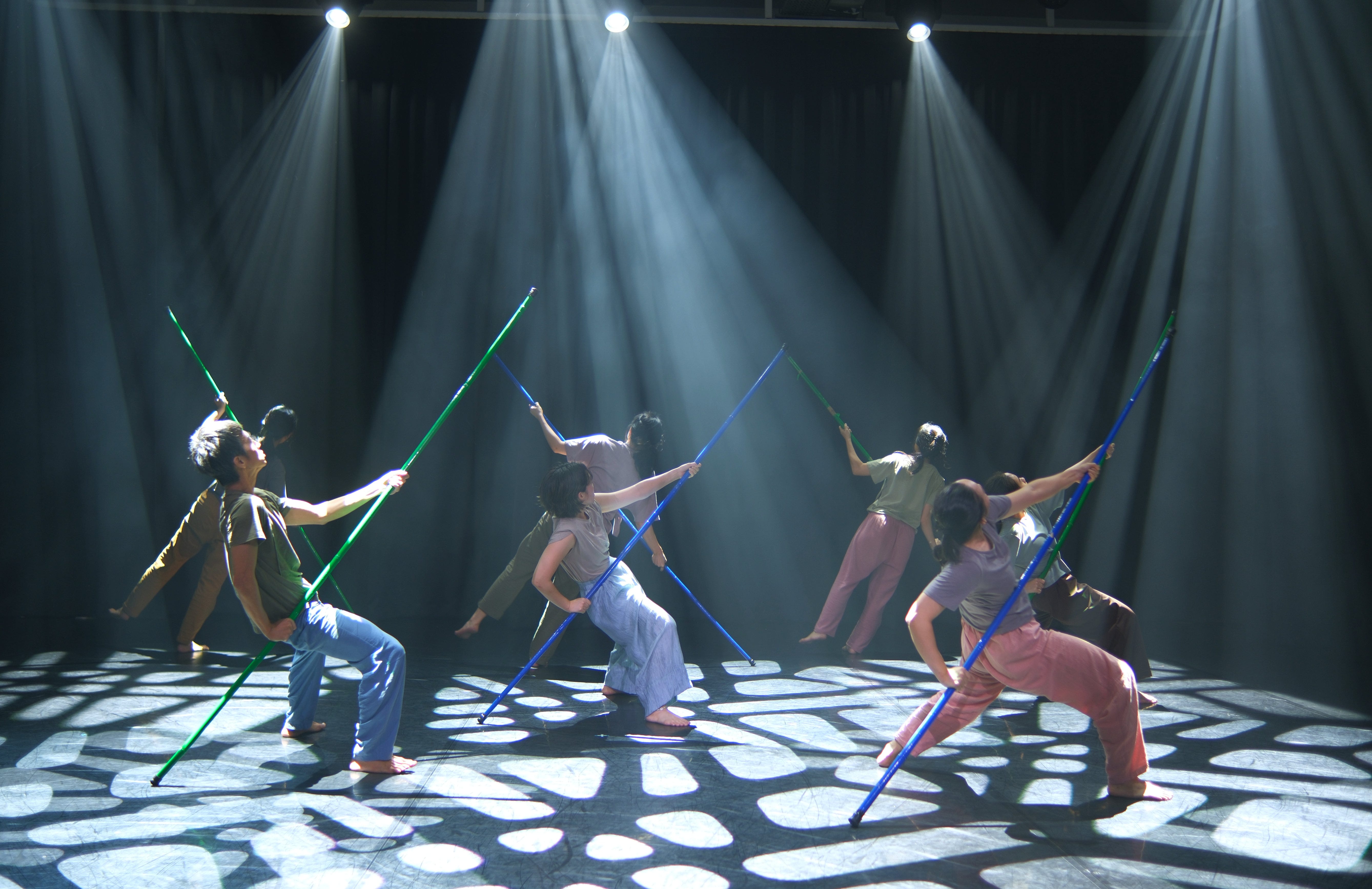
Coming back to my point earlier that the dance is about struggle. Struggle both laborious and effortless. Many times in the dance do we see dancers struggle with the poles, struggle to build with the poles, fall before vaulting in midair. The projections obviously alluded to the building of Singapore – the skyscrapers shooting up, the impressive array of colourful HDB blocks. It didn’t occur to me how well constructed Singapore was, until a recent trip to Cameron Highlands, where the apartments were just a bit more haphazard, with carparks that are impossible to get out of, did I realize how well-designed (bordering on over-designed) Singapore is. Each corner of the territory has a purpose, at least according to the masterplan by Urban Redevelopment Authority. Each building has gone through the multi-tiered approval process by various agencies. Each property transaction has gone through the standard SOPs (Standard Operation Protocols). Proper requisitions for your acquisitions.
Yet in our attempt to keep everything under control, chaos does inevitably erupt. The dancers couldn’t always get the pole together into another structure. We may travel in unison with the same group of people, to find ourselves drifting and forming other separate groups, living separate and varied experience. We are flung by the chaos of life, just to cross path with people we might miss in the next turn.
And somehow, we always end up home. My second favourite scene was still the one against the whirring of the fan, against the window grills of an apartment. The lighting was amber and soft, two dancers were connecting by mirroring, and in mirroring the movements do they connect. In the new studio theatre of Sigma, every element can be transformed into something else. The curtains can be open up to a plain white wall or curtain to facilitate projection. The curtains can create a different texture in itself in the visually arresting scenes. And finally, the door behind the curtain opens up to the port, always lit by the warm amber light, strange in an industrial and uninhabitable place.
This is not an SG60 performance (yes this is the 60th year of the founding of Singapore). But it is an ode to Singapore and its people, and an ode to human toil. The poles do not have to mean anything. When I asked some of the dancers what the poles meant to them post-performance, some said, quite candidly, it is just a symbol, another prop. To that extent, the choreographer is well aware of the frustrations of working with the poles. But discomfort is growth. The poles did take on meanings of whatever we pour into it. Every tilt that threatens to throw us off balance, or every leaning and counterbalancing we perform to stay afloat. The poles are a collection of human endeavours, an artifice, and a testament to the care we give.
PHOTO CREDITS: @midtonegrey
UPCOMING SHOWS:
5 Dec 8pm sold out
6 Dec 8pm
7 Dec 3/8pm
ARTISTIC DIRECTION & FILM
Hong Guofeng
CHOREOGRAPHY
Christina Chan, Hong Guofeng, Marcus Foo, Chua Chiok Woon.
SOUND DIRECTION
Redwan Hamzah
MUSIC
Phillip Tan, Namie Rasman, Redwan Hamzah, Venetia Lim.
COSTUME
Audrey Ng
DANCERS
Au Shu Qi, Bernice Liau, Cherilyn Chia, Chua Chiok Woon, Coco Yau, Foo Qi En, Germaine Cheng, Kong Weijie, Leong Kit Yee, Mark Tay, Nah Jiemin, Tajima Emiri.
PRODUCTION TEAM
Production Manager – Chen Wanxin
Stage Manager – Darren Ho
Finance Manager – Melissa Ng
Marketing Manager – Chua Chiok Woon
Video Archival – Patrick Poh